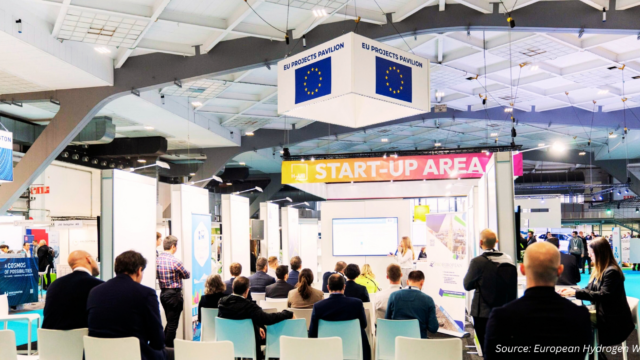


On 17 June 2026, we joined the EU-funded projects FASTCH2ANGE and PROMISERS for a joint technical workshop in Castelvetro di Modena, Italy. The event brought together researchers, technology developers and industrial stakeholders to exchange knowledge and discuss some of the key challenges facing hydrogen technologies in Europe.
One of the central themes of the workshop was the development of PFAS-free solutions. PFAS (per- and polyfluoroalkyl substances) are a large group of synthetic chemicals widely used in industrial applications due to their exceptional chemical and thermal stability. However, because they persist in the environment and are increasingly subject to regulatory restrictions, researchers across Europe are working to identify safer and more sustainable alternatives for hydrogen technologies.
Throughout the workshop, we shared the latest developments from our projects through project presentations, technical highlights and a roundtable discussion focused on three common themes:
- Materials sustainability and PFAS substitution
- Industrial scale-up and manufacturing readiness
- Testing protocols, benchmarking methodologies and durability assessment
Several key messages emerged from the discussions.
First, PFAS substitution is a shared priority across the three projects. The discussions also highlighted that replacing PFAS must go beyond membranes and ionomers, as these substances may also be present in gaskets, seals, coatings, tubing and other auxiliary components.
Second, long-term durability remains essential for industrial deployment. PFAS-free alternatives will only succeed if they can maintain their performance under demanding operating conditions over extended periods.
We also reinforced the idea that industrial scale-up goes far beyond electrochemical performance. Material availability, manufacturability, reproducibility, component lifetime and system integration are all critical factors for future deployment.
Another important topic was the need for more harmonised testing protocols. Comparing technologies across projects remains challenging due to differences in operating conditions, test benches and reporting methodologies.
Finally, sustainability assessments must be integrated from the earliest stages of development. Approaches such as Life Cycle Assessment (LCA), Techno-Economic Assessment (TEA) and Safe-and-Sustainable-by-Design (SSbD) will be essential to ensure that PFAS-free alternatives deliver genuine environmental and economic benefits.
Beyond the technical discussions, the workshop also demonstrated the value of bringing together complementary European projects to exchange experiences and identify future collaboration opportunities.
We would like to thank FASTCH2ANGE and PROMISERS for making this event possible.
Watch the recordings of the workshop sessions here: