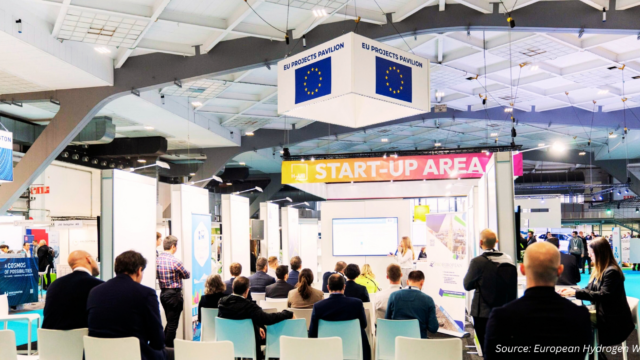


In the framework of the EFCF 2025 event, the HYScale team from CNR-ITAE prepared a conference paper on optimisation of porous transport layers and interlayers, which was successfully published on ZENODO.
This study investigates how the design of electrolysers affects the efficiency and durability of flow-field-free anion exchange membrane alkaline electrolysers. Small design choices, such as the thickness of internal layers and how tightly the parts are pressed together can make a big difference, especially when the system is working hard. Thicker metal layers make the device more durable, while some materials work better at first but wear out faster over time. Overall, the study shows that better design is key to making reliable and efficient systems for producing green hydrogen.
Key findings:
- Cell architecture strongly affects electrolyser performance and lifetime
- Thicker nickel felt PTLs improve stability under high pressure and current
- Mechanical compression must be carefully optimised
- Interlayers influence both initial efficiency and degradation behaviour
- Performance–durability trade-offs are unavoidable and must be balanced
- Flow-field-free alkaline electrolysers are viable with proper material optimisation
- Findings support scalable, pressurised green hydrogen production pressurised alkaline electrolysers suitable for large-scale green hydrogen production.
Explore the full paper here.